How Much Fiber Per Day to Lose Weight?
Last updated: September 6, 2026
Pediatric targets are guideline values. Talk to your pediatrician before changing a child's diet.
What that looks like as food
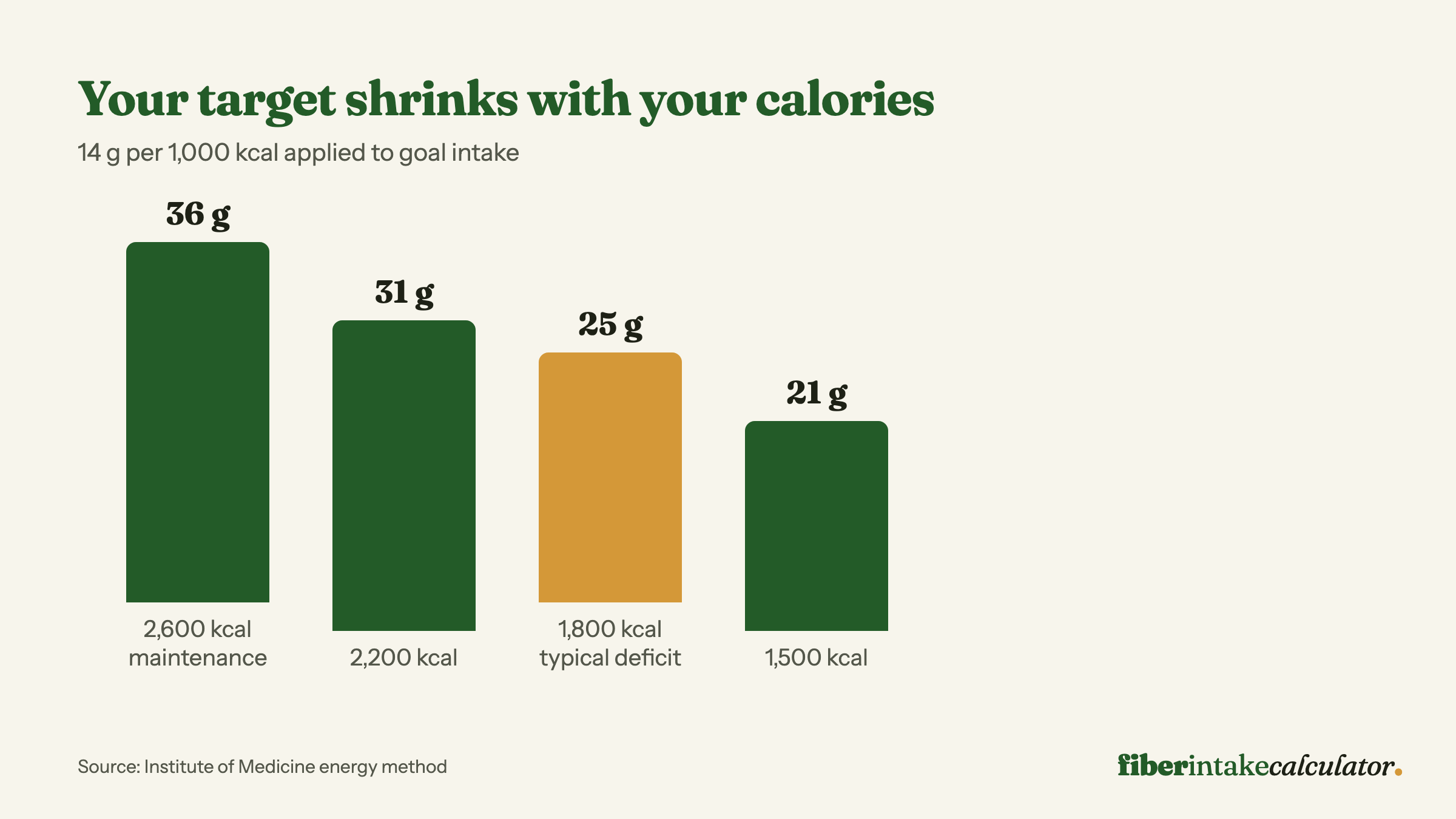
The generic advice to “eat 25 to 38 grams” assumes maintenance calories. On a deficit, scale fiber to what you’ll actually eat: 14 g per 1,000 kcal of your goal intake. Enter your goal calories above and the calculator does exactly that.
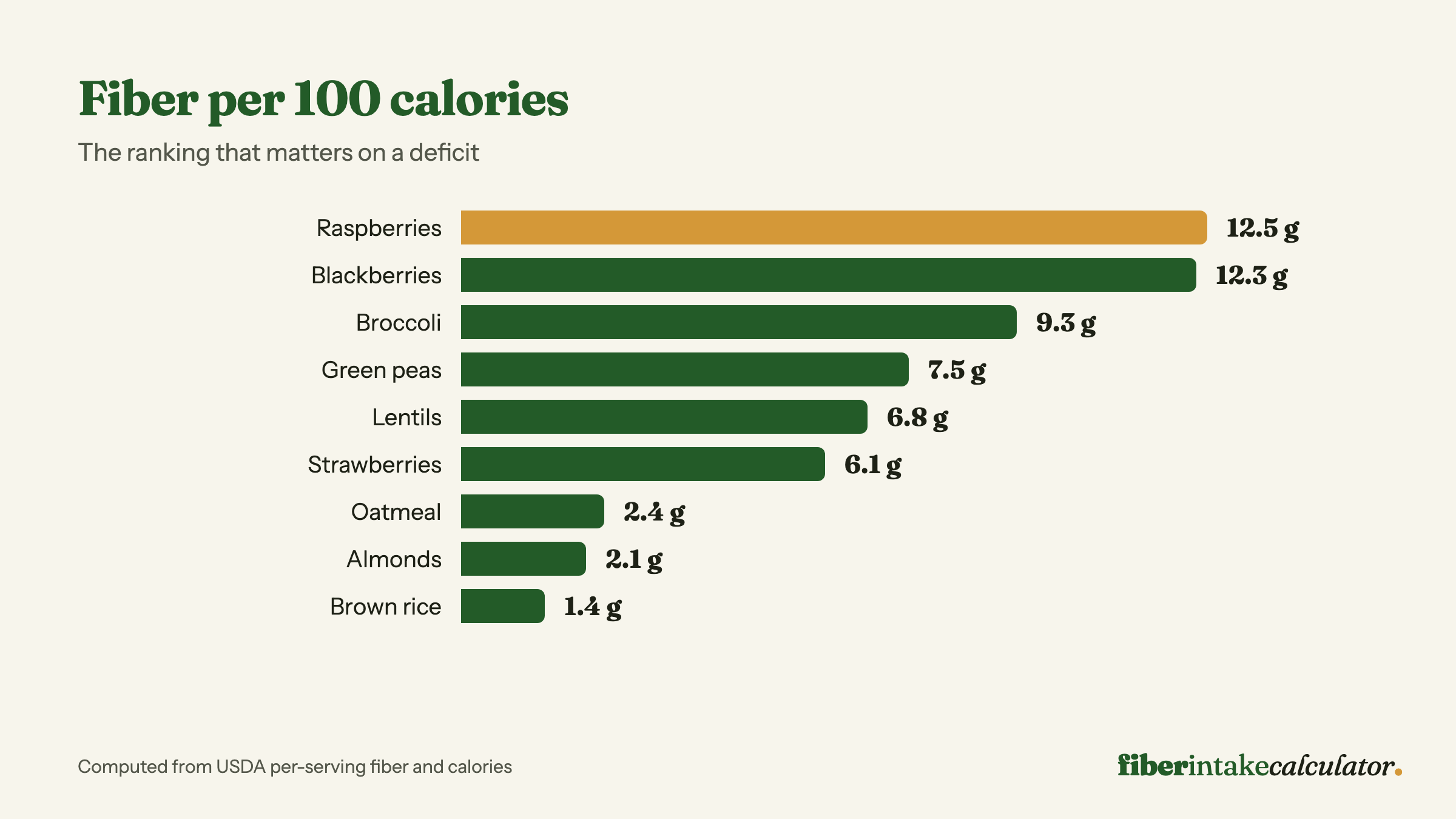
Then spend your smaller calorie budget on the foods that carry the most fiber per calorie. Berries, vegetables, and legumes top that ranking on the high-fiber foods chart. Among legumes the spread is wide: navy beans give 7.5 g of fiber per 100 calories and peanut butter gives 0.8 g, as our ranking of legumes high in fiber sets out.
The size of that decision is easy to underrate. Priced across a whole day, a 54.3 g fiber target costs 674 calories built from density picks and about 1,970 built from staples like bread, rice and nuts, which is the calorie arithmetic behind the fibermaxxing trend.
Fruit is where that ratio swings hardest. Raspberries give 12.5 g of fiber per 100 calories and grapes give 1.3 g, a tenfold spread inside one food group. The fruit ranking sorts all 28 by that column.
Berries take the first two places on that list and hold them against every other food group, so they are worth knowing individually on a deficit. Our berry ranking per calorie shows where the cheap ones stop: farm-grown blueberries give 4.3 g per 100 calories and sweetened dried cranberries 1.7 g.
Vegetables spread almost as wide, and the split is starchy against green. Cooked turnip greens give 17.5 g of fiber per 100 calories while a baked potato gives 2.3 g, so the vegetable ranking is worth sorting by that column before you plan a week of meals on a deficit.
Frequently asked questions
Does fiber actually help with weight loss?
Indirectly but reliably: high-fiber foods take longer to eat and digest, blunt blood-sugar spikes, and add bulk that triggers fullness signals, so you tend to eat fewer calories without counting them. Fiber itself contributes almost no calories.
Should I eat MORE fiber when cutting calories?
Aim for the same 14 g per 1,000 kcal ratio applied to your goal intake; the calculator above does this. In practice that means fiber-dense choices matter more on a deficit: you have fewer calories to spend, so each one needs to carry more fiber.
What are the best high-fiber foods for weight loss?
The ones with the most fiber per calorie: raspberries and blackberries (about 8 g per 65 kcal cup), non-starchy vegetables like broccoli, and legumes, which pair fiber with protein, the two most satiating nutrients.
Built and maintained by the FiberIntake team, with data from USDA FoodData Central and peer-reviewed sources. Figures are checked against the cited source before publish. About this site →